Type 2 diabetes only. Education for adults exploring remission with clinical support.

Read the safety note

A first-principles approach to remission

Type 2 diabetes is the tip of the iceberg.

The first target is not a perfect diet label. It is losing enough excess weight to reduce fat in the liver and pancreas—and move below your personal fat threshold.

Weight firstThe central remission lever
Carbs secondFind your tolerance
Maintenance alwaysProtect the result
An iceberg with the liver, pancreas, heart, fat tissue and joints represented beneath the waterline
The visible diagnosisType 2 diabetes
Under the surfaceInsulin resistance + ectopic fat

A visual metaphor: these conditions often cluster, but not every condition is caused by diabetes.

Look below the glucose

One metabolic system.
Many warning lights.

Glucose is measurable, but it is only one expression of a much larger metabolic story.

Fatty liverHigh blood pressureHigh triglyceridesSleep apneaPCOSGoutHeart & stroke riskLow testosterone / libidoFatigueJoint load

Fatty liver, hypertension, dyslipidemia, PCOS, sleep apnea, gout and vascular risk frequently travel with insulin resistance. Thyroid disease can coexist and deserves proper assessment, but should not automatically be blamed on diabetes.

Dr. Thapa’s framework

01 / First principles

01

The remission engine

Lose enough weight.

In typical type 2 diabetes, sustained weight loss can reduce excess liver and pancreatic fat, improve insulin sensitivity and allow insulin-producing cells to recover function. The amount required is personal—not dictated by an “ideal” BMI.

The route is flexible. Crossing the threshold is the target.
02

The glucose lever

Find your carbohydrate tolerance.

Carbohydrate reduction often lowers glucose quickly and can reduce hunger for some people. The therapeutic dose varies: stricter at first for some, more liberal in maintenance for others.

Use glucose response, A1C, appetite and sustainability—not ideology.
Clinical definition

Remission: A1C below 6.5% for at least three months without usual glucose-lowering medication. It is not a cure, and eye, kidney, foot and cardiovascular follow-up continues.

See the Canadian guideline

Researcher spotlight

Professor Roy Taylor

Professor of Medicine & Metabolism, Newcastle University

“Personal fat threshold” explains why type 2 diabetes is not reserved for people at a high BMI.

Each person has a different capacity to store energy safely in subcutaneous fat. Once that capacity is exceeded, fat is more likely to spill into organs such as the liver and pancreas. Genetics and fat-cell biology help set that capacity.

Taylor’s twin-cycle hypothesis and the DiRECT and ReTUNE studies changed the conversation: substantial weight loss can normalize organ fat and glucose even in some people with a BMI below the conventional obesity range.

Below your threshold

Subcutaneous storage has room

Energy is stored predominantly under the skin, with less spillover into organs.

Your personal threshold

Above your threshold

Fat begins to overflow

Liver and pancreatic fat can rise, driving excess liver glucose and beta-cell stress.

BMI is context—not destiny.

Waist, weight trajectory, ethnicity, family history, metabolic markers and response to weight loss often reveal more than BMI alone. A lean or atypical presentation also deserves assessment for LADA, MODY, pancreatic disease, medication effects or another diagnosis.

The twin-cycle hypothesis

How excess energy can become high glucose.

A simplified map of a complex physiology—not a claim that every person follows an identical path.

  1. 01Chronic energy surplus

    More energy enters storage than leaves it.

  2. 02Liver fat rises

    Insulin becomes less able to restrain liver glucose output.

  3. 03Fat export increases

    The liver sends more triglyceride-rich VLDL into circulation.

  4. 04Pancreatic fat rises

    Susceptible beta cells lose normal meal-time insulin response.

  5. Weight loss reverses pressure

    Liver fat can fall quickly; pancreatic recovery may follow over time.

Routes to the same physiology

Method is negotiable.
The result is measurable.

Choose the least intensive tool likely to work, then escalate when needed. Every route should protect muscle, nutrition and long-term follow-through.

01

Food-based weight loss

Vegan, Mediterranean, lower-carbohydrate, animal-forward and other whole-food patterns can all work if they create a sustainable energy deficit and preserve lean mass.

Best diet: the effective one you can maintain
02

Total diet replacement

The DiRECT and NHS remission programmes use a time-limited, nutritionally formulated low-energy phase, followed by food reintroduction and long-term support.

Strong randomized and real-world evidence
03

Fasting & meal timing

Shorter eating windows or intermittent fasting can make energy restriction simpler for some people. They are tools—not magic independent of energy balance.

Medication review comes first
04

Anti-obesity medication

GLP-1–based therapies and other medications can produce clinically meaningful weight loss and improve glucose while they are used, when medically appropriate.

Pair medication with a maintenance plan
05

Metabolic surgery

Bariatric and metabolic procedures are powerful options for selected people and can lead to durable remission, but require lifelong nutritional and medical follow-up.

An evidence-based treatment, not a failure

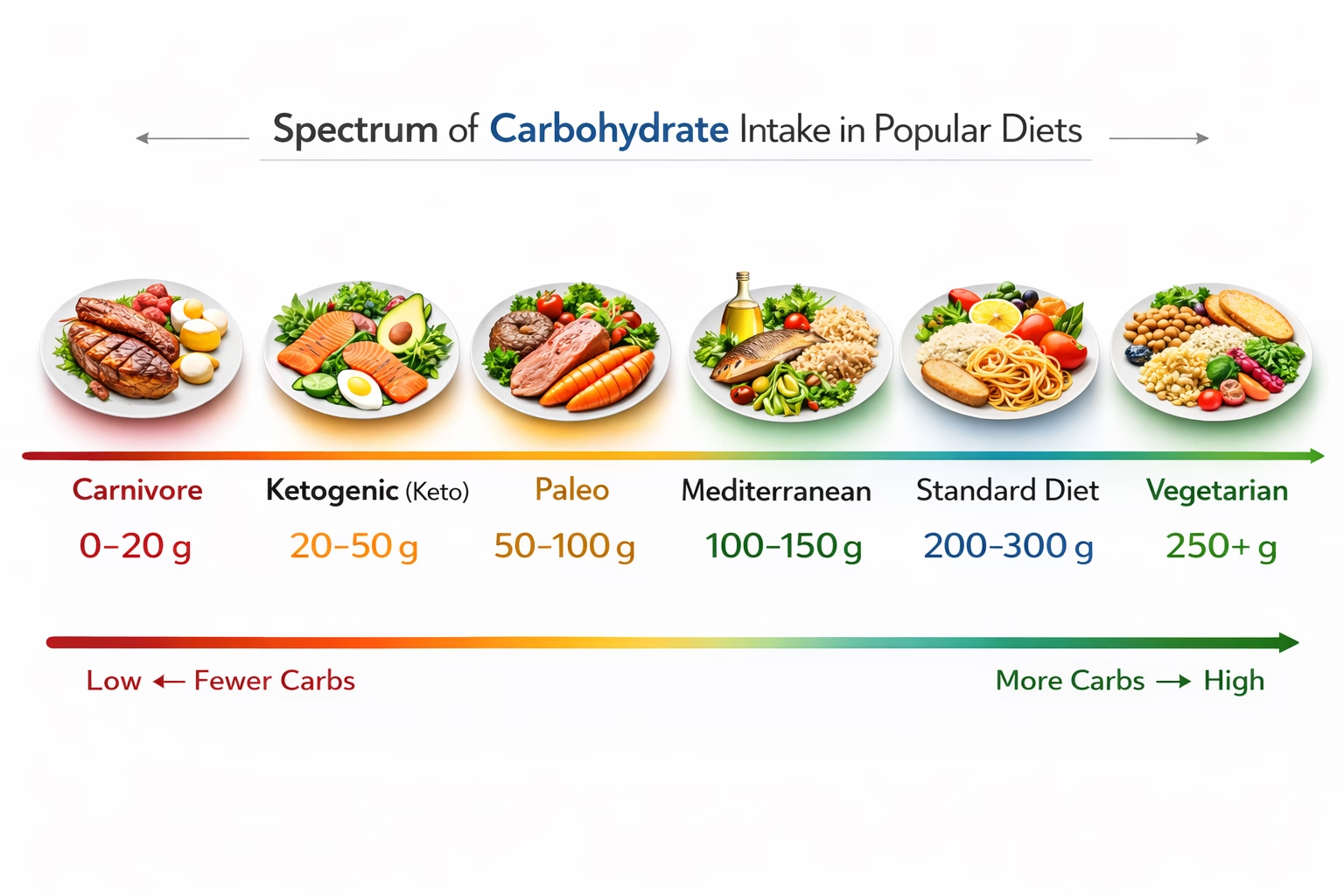
The carbohydrate spectrum

Lower is a dose.
Not a religion.

Most digestible carbohydrate contributes to blood glucose, but foods, portions and individual responses differ. Lowering the dose can improve post-meal glucose immediately—before major weight loss occurs.

Spectrum of daily carbohydrate intake from carnivore and ketogenic through paleo, Mediterranean, standard and vegetarian diets
Illustrative categories reused from Airdrie Metabolic Health. Real diets overlap, labels vary, and a gram target is never a complete nutrition prescription.
50–70g/day

A useful reference point—not a biological law

The CSIRO low-carbohydrate programme uses 50–70 grams of high-quality, minimally refined carbohydrate per day.

That range can be a practical starting experiment for some adults. Your effective maintenance ceiling may be lower or higher, and depends on medication, activity, food quality, kidney health, lipid response and what you can sustain.

Read the CSIRO explanation

Dr. Thapa’s preference

An animal-forward, whole-food approach

For patients who prefer it, Dr. Thapa often starts with protein-rich whole foods—meat, fish, seafood, eggs and dairy as appropriate—plus non-starchy plants according to preference and tolerance. This can simplify carbohydrate reduction, support satiety and help preserve muscle during weight loss.

It is a clinical preference, not a claim that vegan, Mediterranean or other patterns cannot work. Very restrictive carnivore approaches have limited long-term remission-trial evidence; nutritional adequacy, LDL response, kidney function and individual risk should be monitored.

Find your own ceiling

A simple tolerance experiment

  1. 1Choose a consistent carbohydrate range with your clinician.
  2. 2Track fasting and post-meal glucose, hunger, energy and weight.
  3. 3Review A1C, medication needs, lipids and sustainability.
  4. 4Add or remove carbohydrate deliberately—then remeasure.
Low-carb remission meta-analysis

The dawn phenomenon

“I didn’t eat.
Why is my morning sugar higher?”

Because glucose does not come only from food. Your liver stores it—and releases it.

In the early morning, circadian hormones signal the liver to increase glucose production so the body can wake and move. In type 2 diabetes, liver insulin resistance and an insufficient insulin response can let that rise run higher than intended.

A typical clue is a stable overnight glucose followed by a pre-dawn rise, without a preceding low. CGM—or selected overnight checks interpreted with your care team—can help separate dawn physiology from late food, poor sleep, medication timing or nocturnal hypoglycemia.

10 PM2 AM5 AM7 AM
Sleeping
Hormones rise
Liver releases glucose

Morning glucose ↑

What may helpEarlier, lighter evening mealsLess refined carbohydrate at nightPost-dinner movementBetter sleep and sleep-apnea treatmentClinician-guided medication timing

Fasting as a tool

Less often can make less energy simpler.

Fasting can reduce eating opportunities and help some people access stored energy. It is not required for remission, and longer is not automatically better.

12–14 h

Overnight reset

Finish dinner, remove late snacks and eat breakfast when genuinely hungry.

8–10 h

Time-restricted window

Concentrate meals in a consistent daytime window, often earlier rather than later.

24 h+

Extended fasting

A higher-risk medical tool, not a casual challenge. Use only with individualized supervision.

Medication safety is non-negotiable.

Fasting or abrupt carbohydrate reduction can cause hypoglycemia with insulin or sulfonylureas, and can increase ketoacidosis risk in some situations—particularly with SGLT2 inhibitors, illness, dehydration or prolonged fasting. Review medications first. Never stop insulin on your own.

ADA fasting guidance

Maintenance is treatment

Remission is a direction, not a finish line.

Weight regain can rebuild liver and pancreatic fat, and glucose can rise again. The maintenance plan begins before the weight-loss phase ends.

01

Know your guardrail

Set a personal weight range that triggers early action—not shame.

02

Protect muscle

Prioritize adequate protein and progressive resistance training.

03

Keep measuring

Repeat A1C and cardio-kidney risk assessment; continue eye and foot care.

04

Plan for relapse

Use a pre-agreed food, fasting, medication or support “rescue” plan early.

How Much Weight Can You Really Lose in 5 Days?

The scale can fall dramatically during a fast—but only part of that change is body fat. Here is the physiology, the math and Dr. Thapa’s own repeated fasting data.

Read the article

Read deeper

Three useful lenses.

Books can make the science practical. They do not replace individualized medical advice.

Dr. Rajat Thapa, Family Physician in Airdrie, Alberta
MD, PhD

Family Physician
Metabolic Health

About the physician

Dr. Rajat Thapa

Family Physician in Airdrie, Alberta, with a focused clinical interest in metabolic health, obesity, insulin resistance and sustainable chronic disease care.

Dr. Thapa helps people understand why rising blood sugar, fatty liver, high blood pressure, sleep disruption, gout, PCOS and other cardiometabolic concerns so often cluster. His approach begins with the major physiological target—enough weight loss to reduce ectopic fat—then uses carbohydrate reduction, meal timing, movement, sleep and medication according to the individual.

Before medicine, Dr. Thapa completed a PhD in behavioural neuroscience at the University of Lethbridge. That training shapes his practical approach to behaviour change: improvement lasts when the environment and routine make the desired action easier to repeat.

He lives in Airdrie with his family and is the founder of CentaurMD.ca, reflecting an ongoing interest in building tools that support better care and decisions.

“The diet name is not the treatment. The treatment is reaching and maintaining the physiology of remission safely.”

Evidence around the world

Different programmes.
One recurring signal.

Remission is most likely when enough weight is lost, medication is adjusted safely, and long-term support prevents regain.

Newcastle, UK

The personal fat threshold

Roy Taylor’s twin-cycle work places excess liver and pancreatic fat at the centre of typical type 2 diabetes—and explains why meaningful weight loss can restore normal glucose control in many people.

2025 review
UK primary care

DiRECT and the NHS programme

A structured low-energy programme showed that remission can be delivered in routine primary care and at health-system scale. The long-term lesson is equally clear: continued support matters.

NHS Path to Remission
International

A shared definition

The international consensus definition is A1C below 6.5% for at least three months without usual glucose-lowering medication. Remission is not a cure; monitoring continues.

Consensus report
Canada

A clinical goal, not a promise

Diabetes Canada supports remission as a possible treatment goal for some people while emphasizing individualized care, medication safety and ongoing complication screening.

Diabetes Canada

Common questions

The nuanced answers.

Can a vegan diet put type 2 diabetes into remission?+

Yes, for some people—especially when it produces enough sustained weight loss. The same is true of Mediterranean, lower-fat, lower-carbohydrate and animal-forward patterns. Food quality, protein adequacy, lean-mass preservation and maintenance matter whichever route you choose.

Do I have to reach a “normal” BMI?+

No universal BMI guarantees remission. The key concept is meaningful loss from your personal starting point and reduction of ectopic fat. People at a lower BMI can still exceed their personal fat threshold; people at a higher BMI may remain metabolically well for longer.

Is a morning glucose rise proof that I ate too many carbs?+

No. Late food may contribute, but the dawn phenomenon comes from increased liver glucose output before waking. Look at the full overnight pattern and review sleep, stress, illness and medication timing with your clinician.

Does remission mean I can stop follow-up?+

No. Remission can relapse, and prior glucose exposure may still carry risk. Continue A1C, blood pressure, lipids, kidney, eye and foot monitoring on a schedule agreed with your care team.

Start with your physiology

Build a remission plan around your real life.

Book an in-person visit for a comprehensive metabolic and type 2 diabetes assessment at One Health Associate Medical in Airdrie.

Call (403) 948-6422
Clinic

One Health Associate Medical

Address

836 1 Ave NW #201
Airdrie, AB T4B 0V2

Phone(403) 948-6422
Clinic websiteonehealthairdrie.ca